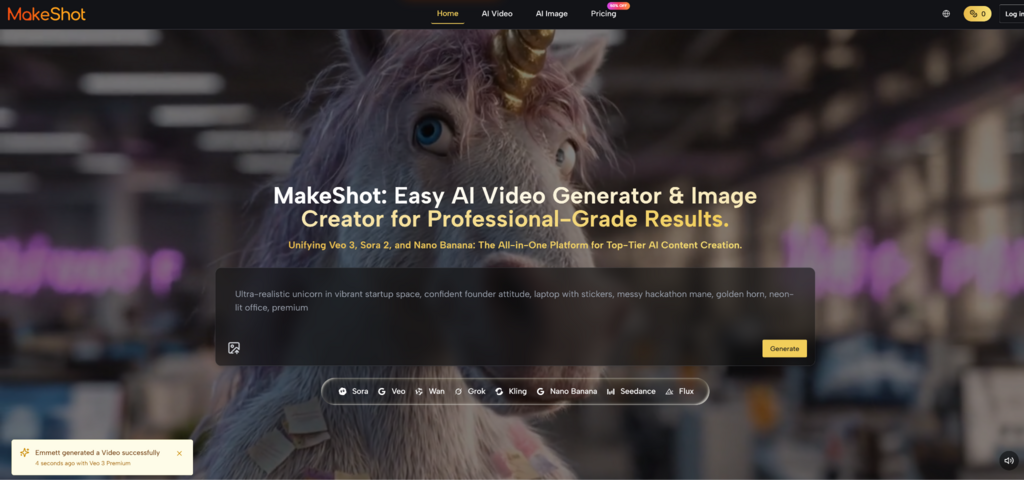
You know the feeling. You have spent hours perfecting a graphic. The lighting is exquisite, the composition is balanced, and the message is clear. You upload it to your social feed, waiting for the engagement to roll in.
And then… silence.
It is not your fault. The digital landscape has shifted beneath our feet. We are living in an era of hyper-stimulation. The human eye has evolved to detect motion—a survival instinct from our hunter-gatherer days that now dictates our scrolling habits. In a sea of static imagery, a still photo is like a statue in a crowded room; it is beautiful, but it blends into the background.
The pain of low engagement is real. It feels like you are shouting into a void. You watch competitors with half your talent to double the attention simply because their content moves. You worry that to keep up, you need to learn complex animation software or hire an expensive video production team. The gap between the story you want to tell and the tools you have feels like a canyon.
But what if you could build a bridge across that canyon in seconds? What if you could breathe life into that “statue” and make it speak?
My Personal Epiphany: The Day the Picture Moved
I remember the exact moment my perspective changed. I was working on a campaign for a boutique coffee brand. We had these stunning shots of steam rising from a fresh brew, but on Instagram, they just looked flat. The “steam” was just a white blur. The emotion was frozen.
I was desperate for a solution that didn’t involve re-shooting everything as video. That is when I stumbled upon a tool that claimed to turn images into video using AI. Skeptical but out of options, I uploaded the coffee photo.
The result gave me chills. The steam didn’t just appear; it swirled. The light seemed to dance on the ceramic rim. Suddenly, you could almost smell the coffee. That was my introduction to the power of Image to Video AI. It wasn’t just a tech tool; it was a narrative engine. It turned a frozen moment into a living memory.
The Alchemy of Attention: How It Actually Works
Think of this technology not as a video editor, but as a “visual interpolator.”
Imagine you have a book, but you only have the first and last page of a chapter. A traditional editor would ask you to write every single word in between. That is what manual animation feels like—tedious, frame-by-frame labor.
This AI acts like a master storyteller who reads the first page (your image) and intuitively understands exactly what should happen next. It analyzes the pixels, understands the depth, lighting, and context, and hallucinates the motion that should be there.
If you upload a picture of a ocean, it knows waves should crash, not slide sideways. If you upload a portrait, it knows eyes should blink and heads should tilt slightly. It applies physics of the real world to your static digital assets.
Breaking Down the Magic: Features That Bridge the Gap
To truly understand why this shifts the paradigm, we need to look at the “Before” and “After” of your creative workflow.
The Old Way vs. The New Reality
Before: You have a great product shot. To make a video, you need to open After Effects, mask out the subject, create a new layer for the background, apply motion blur, and keyframe the movement.
The Bridge: You upload that same shot to the platform. You type a simple text prompt describing the motion you want.
After: Ten seconds later, you have a cinematic shot of your product that looks like it was filmed with a slider.
From Text to Texture
One of the features that surprised me most was the ability to guide the AI with text. It is not just random motion. You are the director. You can tell the AI to “make the clouds move fast” or “zoom slowly on the face.” It is a collaboration between your vision and the machine’s execution.
The value Equation: A Visual Comparison
Let’s look at the hard facts. As a professional, you care about ROI—Return on Investment but also Return on Imagination. How much of your creative energy is wasted on technical hurdles?
Here is how the modern AI approach compares to traditional methods:
| Feature | Traditional Video Production | Standard Animation Software | Image2Video.ai |
| Time to Result | Days or Weeks | Hours | Seconds |
| Learning Curve | Steep (Film School/Courses) | Moderate (Tutorials required) | Zero (Intuitive Interface) |
| Cost Efficiency | High ($$$$) | Medium ($$) | Free to start |
| Hardware Needs | Powerful PC/Cameras | Good Graphics Card | Browser Only |
| Creative Control | Limited by footage captured | Limited by technical skill | Limited only by imagination |
| Editability | Difficult (Re-shoot required) | Tedious (Re-keying) | Instant (Re-generate) |
Real World Applications: Who Is This For?
You might be thinking, “This sounds cool, but is it for me?” After using it extensively, I have found it fits into workflows I hadn’t even considered.
The E-Commerce Titan
If you sell products online, you know that customers cannot touch what you sell. Video is the closest thing to touch. Turning a static photo of a dress into a video where the fabric ripples in the wind helps the customer “feel” the material. It increases conversion rates because it builds trust.
The Storyteller and Blogger
Blog posts with video retain visitors 2.6x longer than those without. But creating a custom video for every blog header is impossible. With this tool, you can take your featured image, animate it subtly, and suddenly your blog post feels like a premium multimedia experience.
The Social Media Manager
We all have “content drought” days. You have run out of footage. But you have thousands of old photos on your hard drive. This tool allows you to recycle and upcycle old content. That photo from last year’s event? Animate it, add some music, and you have a brand-new Reel or TikTok ready to go.
Navigating the Interface: A User-Centric Experience
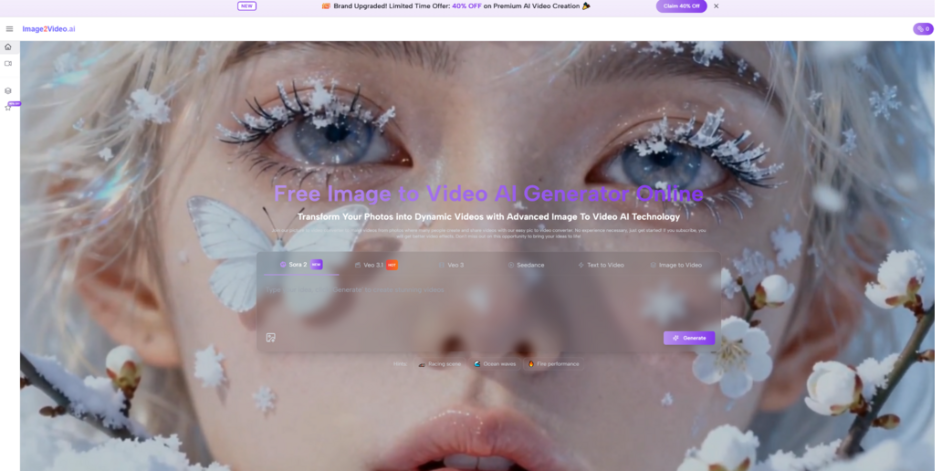
When you first enter the platform, you will notice the absence of clutter. There are no timelines with a thousand tracks. There are no confusing settings.
Step 1: The Upload
You drag and drop your image. It feels familiar, like posting to Facebook.
Step 2: The Direction
This is where you become the director. You can leave it blank and let the AI improvise (which is often surprisingly artistic), or you can provide a prompt. “Fire flickering in the fireplace” or “Leaves falling from the tree.”
Step 3: The Generation
This is the “coffee break” moment. Except you won’t have time to finish your coffee. The generation is fast. When it is done, you don’t just get a file; you get a moment of delight.
Why Empathy Matters in Tech
Throughout my career, I have used tools that felt cold. They were powerful but hostile. What I appreciate here is empathy in the design. The system understands that you are likely a creator who is short on time but high on standards.
It doesn’t punish you for not knowing what a “codec” is. It doesn’t force you to understand “frame interpolation rates.” It simply asks: What do you want to see? and deliver it. This user-centric approach removes the technical anxiety that kills creativity.
The Future of Your Content Strategy
We are moving toward a web that is entirely fluid. In a few years, a static website will look as outdated as a black-and-white TV show today. By adopting image-to-video technology now, you are future-proofing your brand.
You are telling your audience that you are dynamic, evolving, and alive. You are showing them that you care enough about their experience to entertain them, not just inform them.
Conclusion: Unfreeze Your Potential
There is a story locked inside every single image you own. It is waiting for the command to move. It is waiting to breathe.
You do not need a Hollywood budget to capture attention. You just need to see the potential in what you already have. The barrier to entry has crumbled. The only thing standing between you and higher engagement, deeper emotional connection, and better storytelling is the decision to hit “Generate.”
Do not let your best ideas stay frozen in time. Give them the motion they deserve. Because in a world that never stops moving, the only risk is standing still.