

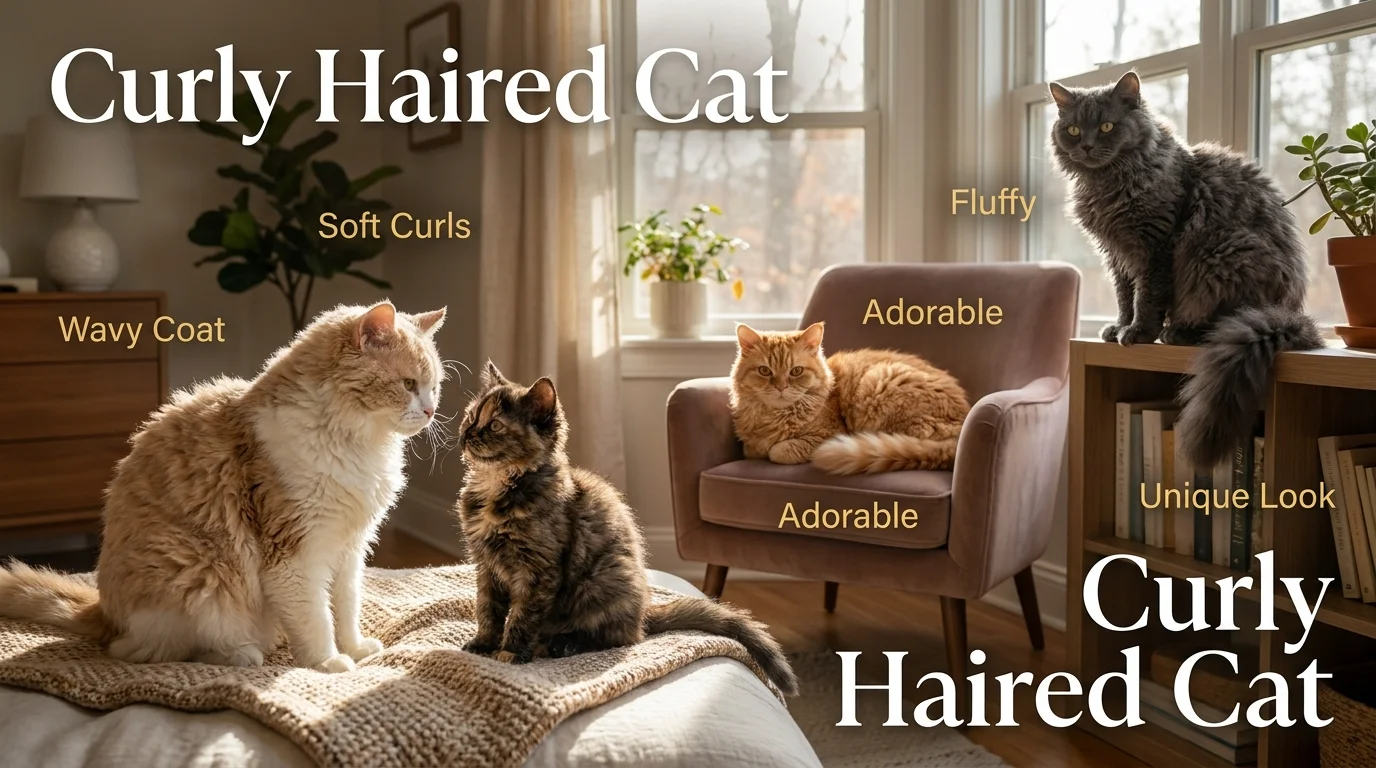
A curly-haired cat can look as though its coat was styled into waves or ringlets, but that unusual texture comes from inherited coat traits. The best-known established breeds are the Selkirk Rex, LaPerm, Cornish Rex, and Devon Rex, each with a different coat texture and care routine. For UAE owners, choosing one also means considering indoor cooling, hydration, grooming, and the level of daily interaction the breed prefers.
If you’re looking for a cat with naturally curly fur, the main established breeds are the Selkirk Rex, LaPerm, Cornish Rex, and Devon Rex. Their coats range from plush ringlets to fine waves, while grooming needs vary by breed. None is guaranteed hypoallergenic, so temperament and care requirements should guide your choice.
| Key point | What UAE cat owners should know |
|---|---|
| Main curly-coated breeds | Selkirk Rex, LaPerm, Cornish Rex and Devon Rex are recognised curly-coated breeds by major cat associations. |
| Plushest coat | Selkirk Rex cats can have dense short or long coats with loose individual curls. |
| Fine, short waves | Cornish Rex and Devon Rex coats are short, soft and distinctly wavy. |
| Grooming | Care ranges from minimal handling for some short-coated Rex breeds to regular combing for fuller coats. |
| Allergies | No cat breed is proven to be completely hypoallergenic. |
| UAE heat | Provide cool indoor areas and fresh water, and take panting or other signs of overheating seriously. |
Key takeaways
- Four established breeds dominate discussions of naturally curly-coated cats: Selkirk Rex, LaPerm, Cornish Rex and Devon Rex.
- The Selkirk has a fuller, plush coat, while the coats of Cornish and Devon Rex are much shorter.
- Coat type does not make any of these breeds allergy-free.
- Grooming should protect the curl rather than flatten or damage it.
- UAE owners should make indoor temperature control and constant access to water part of routine care.
What Makes a Curly-Haired Cat Curly?
Curly coats developed through naturally occurring genetic mutations, and the mutations are not identical across all curly breeds. Research on the Selkirk Rex, for example, linked its distinctive coat to a variant involving the KRT71 gene. Breed histories also show that separate curly traits appeared independently in different foundation cats rather than coming from one universal “curly cat” gene.
The resulting coat structures can look and feel quite different. TICA describes the Selkirk Rex as having curls that affect the guard, down, and awn hairs, creating a dense and plush finish. Cornish Rex cats lack normal guard hairs, while the Devon Rex has a short, wavy coat with modified guard hairs and little undercoat, and the LaPerm retains a light coat with springy curls.
4 Curly Cat Breeds Worth Knowing
1. Selkirk Rex
The Selkirk Rex is usually the breed people picture when they imagine a fluffy cat covered in curls. It comes in both shorthaired and longhaired varieties, with a dense coat arranged in loose individual curls or ringlets. TICA describes the breed as relaxed, social, and affectionate, making it a strong option for households that want a calmer companion without giving up playful behaviour.
Its coat needs more attention than the finer coats of the Cornish or Devon Rex. TICA recommends combing a Selkirk a couple of times each week to remove loose hair and reduce tangles, while gentle handling helps preserve the characteristic curl. That balance makes the breed attractive to people who love a fuller coat but don’t want the maintenance of some straight-haired longhair breeds.
2. LaPerm
The LaPerm has a looser, lighter curl that can form waves, ringlets, and a distinctive curly ruff around the neck. Both longhaired and shorthaired varieties exist, and TICA describes the breed as gentle, affectionate, and strongly interested in human contact. Its coat can also change with age, season, and maturity, so a young cat may not always show the same curl pattern it will have as an adult.
This breed can suit families that want an interactive companion without the dense plushness of a Selkirk. Cats.com notes that the coat is easier to manage than its appearance may suggest, although regular gentle brushing helps reduce tangles in longer coats. Individual grooming needs still vary, so the cat’s coat condition should determine the routine rather than a fixed schedule alone.
3. Cornish Rex
The Cornish Rex has one of the most distinctive coats in the group, with fine waves lying close to the body. TICA describes it as highly social, athletic, and playful, with a strong preference for spending time around people and other compatible pets. This combination makes it a better fit for an active household than for someone who expects an independent cat that spends most of the day alone.
Its fine coat needs relatively little routine grooming, but skin, ears, and toes may need attention if oil builds up. The sparse coat also provides less physical protection than a thick conventional coat, so owners should manage exposure to strong sunlight carefully. An indoor lifestyle is especially sensible in the UAE, where controlled temperatures also reduce exposure to dangerous outdoor heat.
4. Devon Rex
The Devon Rex combines a short wavy coat with large ears, prominent cheekbones and an intensely social personality. TICA describes the breed as intelligent, playful and people-oriented, with many Devons seeking constant involvement in household activity. Puzzle toys, interactive play and companionship can therefore matter more to this breed than elaborate coat maintenance.
Grooming is usually light because the delicate coat does not require aggressive brushing. TICA notes that running a hand over the coat may be enough in many cases, while the ears can collect oily buildup and should be checked regularly. The breed also sheds, despite the common assumption that its short curly coat means no shedding at all.
Grooming Curly Coats Without Damaging the Texture

The first grooming rule is to match the tool and frequency to the individual coat. Selkirk Rex and longer LaPerm coats benefit from gentle combing, while Cornish and Devon Rex coats usually need much less brushing. Pulling hard through delicate curls can remove or damage hairs, so a wide-toothed comb and a patient approach are safer choices for fuller coats.
Bathing should also depend on skin and coat condition rather than a rigid calendar. Cats.com recommends towel drying curly-coated breeds after washing because forceful drying can disturb the curl pattern, while TICA highlights simple coat care for several Rex breeds. UAE owners buying combs, towels, carriers or other supplies can also use WearMart’s guide to online shopping platforms in the UAE when comparing local purchasing options.
Hot weather needs a separate plan from grooming. Veterinary guidance recommends against shaving a cat simply because it is hot, as the coat helps regulate temperature, and ordinary brushing is usually more appropriate. Keep your cat indoors in a cool area, provide constant access to fresh water, and seek veterinary help if you notice panting, drooling, lethargy, vomiting, or other signs of overheating.
Travel also requires planning, as temperature control and coat care should continue while you’re away. Give a boarding provider clear instructions about grooming frequency, feeding, medications, and any skin issues, and confirm that your cat will stay in a climate-controlled environment. WearMart’s guide to pet boarding facilities in Dubai can help UAE residents start comparing local options before checking the details that matter for their individual cat.
Are Curly Cats Hypoallergenic?
A curly or low-shedding coat does not make a breed allergy-free. Allergy specialists note that all cats produce allergenic proteins, including Fel d 1, and hair length alone does not reliably predict how strongly a person will react. Scientific reviews likewise report no established cat breed that can be considered truly hypoallergenic.
People with cat allergies should therefore avoid basing their choice solely on marketing claims about shedding. Spending time around the individual cat before adoption may provide useful practical information, although it cannot guarantee that symptoms will remain mild at home. Anyone with significant allergy or asthma symptoms should discuss exposure with a qualified allergist before bringing a cat into the household.
Choosing the Right Breed for Your UAE Home
Start with temperament rather than appearance, as all four coats suit different lifestyle needs. A Selkirk may suit someone seeking a more relaxed companion, while a Cornish Rex or Devon Rex often fits an active home that can provide frequent play and interaction. A LaPerm can appeal to owners who want an affectionate, people-focused cat with a lighter, springier coat.
Responsible sourcing matters as much as breed choice. Check local rescue organisations first, then investigate breeders carefully if you decide on a pedigree kitten, asking about health screening, living conditions and registration documentation. TICA provides member breeder resources for its recognised breeds, but buyers should still conduct their own checks rather than treating registration alone as a guarantee.
For UAE households, also think through the practical routine before committing. Your home needs dependable cooling, clean water, safe indoor enrichment and a plan for veterinary care or boarding during travel. A distinctive coat is appealing, but a good match depends on whether your schedule and home can meet the cat’s social, grooming, and environmental needs throughout its life.
A Good Fit Is More Than the Curls
Curly-coated cats are memorable, but the coat should be only one part of your decision. Compare temperament, grooming, health history, and social needs before choosing, then build a home routine that keeps your companion cool and comfortable throughout the UAE year. For more locally focused lifestyle and consumer guidance, continue through WearMart’s UAE Market guides as you plan the practical side of pet ownership.
Frequently Asked Questions
They can live comfortably in the UAE when owners provide a safe, temperature-controlled indoor environment and dependable access to fresh water. Hot outdoor conditions can put any cat at risk of overheating, and short-coated Rex breeds are not immune to heat-related illness. Panting, drooling, weakness, vomiting, or collapse require prompt veterinary attention.
The Selkirk Rex usually has the fullest, plushest appearance among the four breeds discussed here. Its dense coat can be short or long, and the curls often form loose clumps or individual ringlets across the body. Long-haired Selkirk Rexes can look especially woolly because their coats are longer and fuller.
No cat breed is guaranteed to be hypoallergenic, including curly-coated breeds. Allergens are produced by the cat rather than by straight hair itself, and all cats can produce proteins such as Fel d 1. People with allergies should assess their own reaction and seek medical advice when symptoms are significant.
Grooming frequency depends on the breed, coat length, and the individual cat’s condition. A Selkirk Rex may need combing a couple of times per week, while Devon and Cornish Rex coats generally need much lighter handling. Check for tangles, oily areas, and skin irritation so you can adjust the routine before small problems become uncomfortable.
Yes, curly-coated cats can shed, although the amount and visibility differ between breeds and individuals. TICA specifically notes that Devon Rex and Selkirk Rex cats shed, even though their coats differ from those of conventional straight-coated cats. Less visible loose hair should not be interpreted as proof that a cat does not shed or produce allergens.

