

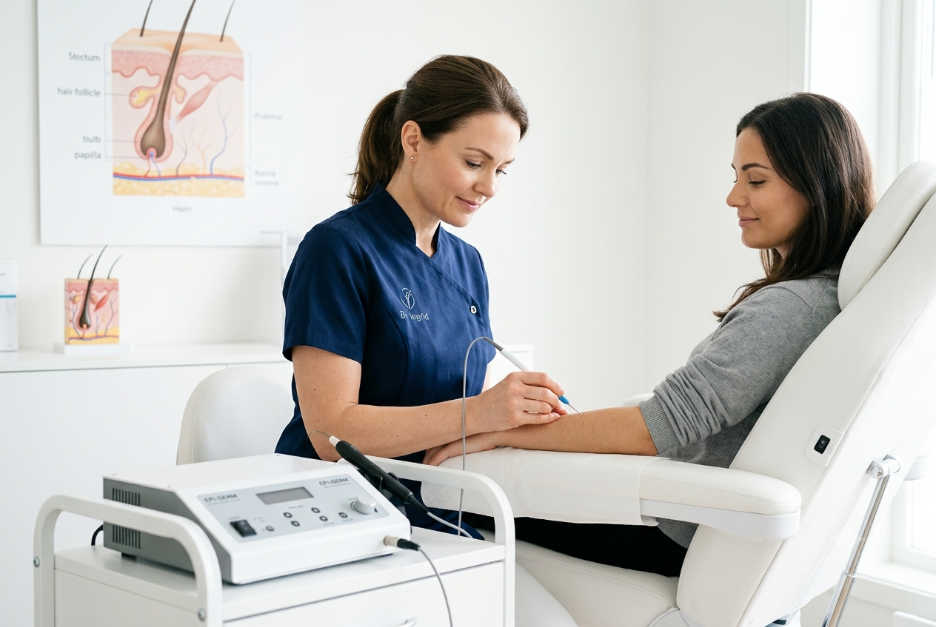
The quest for permanent hair removal often leads people down a path of sticky waxes and expensive lasers that eventually lose their grip. While many methods claim to be permanent, most only offer a reduction in hair growth. Electrolysis stands alone as the only method recognized for total, permanent removal by medical authorities. For those seeking electrolysis in Dubai or anywhere else, understanding the science behind the probe is the first step toward skin that stays smooth for a lifetime. It is a process of precision, targeting the very source of hair growth rather than just the visible shaft.
The mechanics of follicle destruction
Every hair on the human body grows from a follicle, a tiny, complex organ hidden beneath the skin’s surface. At the base of this follicle sits the dermal papilla, the structure responsible for blood supply and cellular regeneration. If the papilla remains intact, the hair will eventually return, no matter how many times it is plucked or shaved. Electrolysis works by inserting a microscopic needle, often no thicker than the hair itself, directly into the follicle opening. Once the probe reaches the base, a small amount of electrical energy is released to destroy those growth cells once and for all.
There are three primary modalities used in this process: galvanic, thermolysis, and the blend. Galvanic electrolysis uses direct current to trigger a chemical reaction within the follicle, turning the body’s natural salt and water into a tiny amount of lye. This chemical solution seeps into every crevice of the follicle, ensuring the growth center is neutralized. Thermolysis, on the other hand, uses high-frequency alternating current to create heat. This heat vibrates the water molecules in the tissue, essentially cooking the growth cells in an instant. The blend, as the name suggests, combines both currents to attack the follicle with dual force.
Success depends entirely on the accuracy of the insertion. If the probe misses the follicle base or fails to reach the proper depth, the hair will simply grow back, making the skill of the operator the single most relevant factor in the process.
Unlike laser treatments, which rely on the contrast between dark hair and light skin to work, electrolysis is color-blind. A laser targets pigment, meaning it struggle with blonde, red, or grey hairs and can be risky for darker skin tones where the laser might confuse skin pigment with hair pigment. Electrolysis ignores color altogether. It targets the physical structure of the follicle. This makes it the only viable option for someone with light peach fuzz or for those whose skin tone makes laser hair removal ineffective or dangerous.
Why results require multiple sessions
Consistency is the price of permanence. A common misconception is that a single pass over an area will leave it bare forever. In reality, hair grows in cycles: anagen (growth), catagen (transition), and telogen (resting). Not every hair is visible at the same time. While a patch of skin might look like it has fifty hairs, there are likely hundreds of follicles beneath the surface waiting for their turn to sprout. Electrolysis can only treat a hair that is currently in the growth phase and visible to the technician.
Hairs are most vulnerable during the anagen phase when they are still firmly attached to the dermal papilla. During this stage, the pathway to the growth center is clear, allowing the electrical current to do its work effectively. If a hair is in the resting phase, it has already detached from the papilla and is essentially a dead weight being pushed out by the skin. Treating a resting hair might still work, but the chances of the current reaching the target with enough precision are lower. This is why technicians insist on a strict schedule.
Skipping appointments allows hairs to move out of their vulnerable growth phase. Sticking to a rigorous timeline ensures that every hair is caught at the exact moment it can be permanently destroyed.
There is also the matter of follicle resilience. Some follicles are distorted or exceptionally deep, especially those that have been plucked or waxed for years. Plucking can cause the follicle to bend into a hook shape under the skin. When the probe is inserted, it follows a straight line and might not reach the curved base on the first try. These stubborn hairs may need to be treated two or three times before the growth cells are completely destroyed. Each treatment weakens the hair until it eventually emerges thinner, lighter, and then not at all.
Managing the sensation and skin recovery
The sensation of electrolysis is often described as a quick sting or a heat flash. Some compare it to a mosquito bite or a flick of a rubber band. Because the face, upper lip, and bikini line have a higher density of nerve endings, these areas tend to be more sensitive than the legs or arms. Modern machines have become faster and more comfortable, but the physical reality is that the process involves a tiny amount of controlled damage to tissue. This is a necessary trade-off for stopping hair growth at its source.
Immediately after a session, the skin might show small red bumps or slight swelling, resembling a mild breakout or a hive. This is a normal inflammatory response as the body reacts to the localized heat or chemical change. Usually, these marks fade within a few hours to a couple of days. It is vital to keep the area clean and avoid touching it with unwashed hands. Dirt and bacteria can easily enter the treated follicle, leading to small whiteheads or irritation that slows down the healing process.
Post-treatment care is non-negotiable for preventing scarring. Avoid sun exposure and harsh chemical peels for at least 48 hours to give the skin’s natural barrier time to reform.
Long-term skin health is a major benefit of electrolysis that is frequently overlooked. Chronic shaving causes razor burn and ingrown hairs, while waxing can lead to skin sagging over decades of pulling. Electrolysis eliminates these issues. Once the follicle is closed and the hair stops growing, the skin often becomes smoother and more even-toned. It stops the cycle of irritation. For people who suffer from painful, deep ingrown hairs, electrolysis isn’t just an aesthetic choice: it’s a medical relief that ends the constant inflammation of the dermis.
Expectations and long term commitment
The total time required to clear an area depends on the density of the hair and the history of previous removal methods. A chin that has been plucked daily for twenty years will take longer to clear than a previously untreated patch of skin. Plucking stimulates blood flow to the area, which can actually strengthen the hair over time. It makes the follicle tougher and the hair thicker. The first few months of electrolysis involve clearing this backlog of hardy, deep-rooted hairs. Patience is the only way through this initial phase.
As the sessions progress, the time spent in the chair decreases. What started as an hour-long weekly appointment eventually becomes a fifteen-minute touch-up once a month, then once a quarter, until the hair is simply gone. This is a journey of diminishing returns in the best possible sense. The financial and time investment is front-loaded. While the cost might seem higher than a lifetime of razors, the math changes when you realize you are paying for an end date, whereas shaving and waxing are costs that never stop.
High-quality electrolysis requires a sterile environment. Ensure the practitioner uses disposable, single-use probes and wears gloves to prevent cross-contamination and skin infections.
Final results are truly permanent. Once the dermal papilla is destroyed, that specific follicle cannot grow a hair again. It’s a biological dead end. While hormonal shifts later in life, such as pregnancy or menopause, can trigger dormant follicles to start producing hair for the first time, the ones already treated by electrolysis remain inactive. This reliability is why the medical community views it as the gold standard. For someone tired of the endless loop of temporary hair removal, electrolysis offers the only real exit strategy.