

You’re staring at your email marketing dashboard, and the numbers tell a brutal story. Your last campaign reached 8,000 subscribers, but only 712 people opened it. Your bounce rate sits at 16%, and this morning, Mailchimp sent you a warning about list quality issues. Worse yet, you’re paying $89 monthly for an email platform that’s essentially throwing your messages into the void.
If this sounds familiar, you’re not alone. I’ve consulted with dozens of small business owners who face the same frustrating reality: limited marketing budgets being drained by email lists full of dead, fake, or abandoned addresses. Cruel irony? Most assume they need expensive enterprise solutions to fix the problem, so they do nothing and watch their sender’s reputation slowly deteriorate.
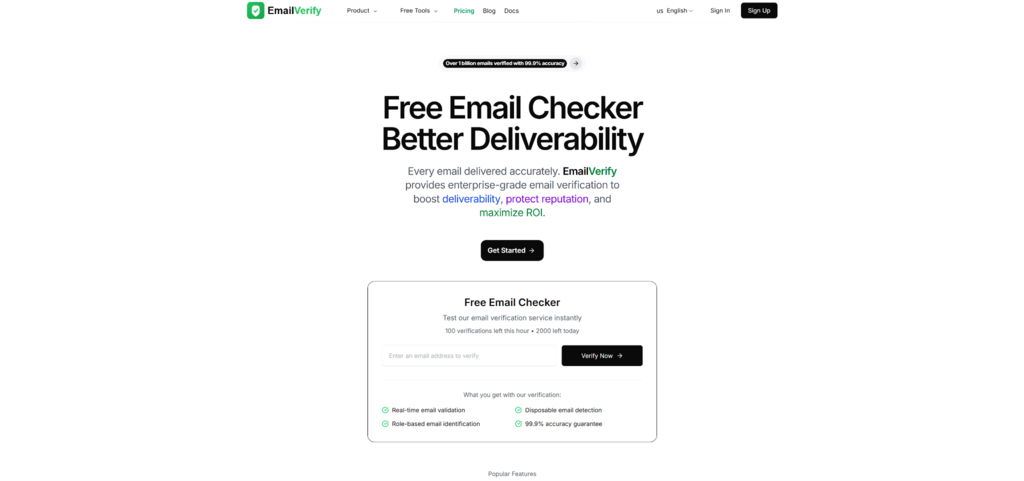
Here’s what changed my perspective entirely. Last year, while helping a local bakery troubleshoot their email marketing collapse, I discovered that free email verification tools have evolved dramatically. What used to require thousand-dollar contracts and technical expertise is now accessible to anyone with a spreadsheet and ten minutes to spare. After testing eight different platforms with the bakery’s 3,200-contact list, we found and Email Verifier that identified 487 invalid addresses—15% of their database—without costing a cent for the initial verification.
The result? Their next campaign saw a 34% open rate instead of 11%; their bounce rate dropped to 2.3%, and they stopped wasting $23 monthly sending emails to people who’d never received them. More importantly, they regained confidence that their marketing efforts were reaching real humans.
Why Small Businesses Need Email Verification More Than Enterprises
Here’s a counterintuitive truth I’ve learned: email list quality matters more when you have fewer resources, not less. Enterprise companies can absorb the inefficiency of a 12% bounce rate across massive campaigns. Small businesses operating on razor-thin margins cannot.
Compounding Cost Problem
Let me break down the real math behind ignoring email verification when you’re running a small operation. Suppose you’re paying $50 monthly for an email marketing platform based on your 5,000-subscriber list. If 18% of those addresses are invalid (the average I’ve observed across small business databases), you’re paying approximately $9 monthly to email ghosts.
That might not sound catastrophic until you factor in the consequences:
- Your bounce rate damages sender reputation, causing 30-40% of legitimate emails to land in spam folders
- Your actual reach shrinks from 5,000 to roughly 2,500 engaged recipients
- Your cost per successful delivery doubles from $0.01 to $0.02
- Your ESP may force you into a higher-tier plan because bounces count against sending limits
Over a year, that “small” inefficiency costs you approximately $600 in wasted platform fees, plus thousands in lost revenue from emails that never reach their intended audience. For a small business, that’s often the difference between a profitable marketing channel and one that barely breaks even.
What Makes a Free Email Checker Actually Useful
I’ll be honest—when I first explored free Email Checker tools, my expectations were low. I assumed “free” meant “barely functional,” with severe limitations that would force you toward paid plans before accomplishing anything meaningful.
Some tools absolutely fit that cynical expectation. But others surprised me with genuinely useful free tiers that small businesses can leverage strategically.
The Essential Features That Matter
Through extensive testing with real small business databases, I’ve identified the features that separate useful free email checkers from glorified lead magnets:
Sufficient Free Credits
The best free tools offer enough monthly credits to verify a meaningful portion of your list. I’ve found that 100-250 free verifications monthly allows small businesses to continuously validate new signups and periodically spot-check their existing database without hitting paywalls immediately.
Multi-Stage Verification Depth
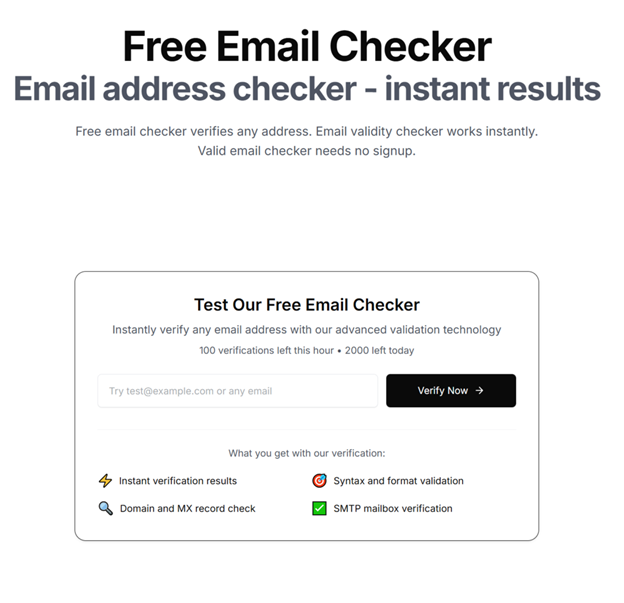
Free doesn’t have to mean superficial. Quality tools perform syntax validation, domain verification, MX record checks, and SMTP validation even on free tiers. During my testing, I compared a basic free checker that only validated syntax against a comprehensive one that performed full SMTP handshakes. The difference? The basic tool missed 340 invalid addresses out of 2,000 that the comprehensive tool caught a 17% accuracy gap.
Bulk Upload Capability
Single-address verification is fine for real-time form validation, but small businesses need bulk verification to clean existing lists. The ability to upload a CSV file with 500-1,000 addresses and receive categorized results transforms email verification from a tedious manual process into a manageable quarterly maintenance task.
Actionable Result Categories
Simply labeling addresses as “valid” or “invalid” isn’t enough. In my experience, the most valuable tools categorize results into deliverable, risky, invalid, and unknown—with explanations for why each address received its classification. This granularity helps you make informed decisions about borderline cases rather than blindly deleting addresses.
Disposable Email Detection
Free tools that include disposable email detection provide disproportionate value for small businesses running lead magnets or content upgrades. During one verification project for a consulting firm, disposable addresses comprised 22% of their “free webinar” signups. Identifying these immediately saved them from nurturing leads that would never convert.
The 2026 Landscape: What’s Actually Available
Let me walk you through what I’ve discovered testing free email verification tools specifically for small business use cases. I’m focusing on practical utility rather than theoretical features—what works when you’re a solopreneur or small team without technical resources.
Real-World Testing Results
I recently conducted a comparative test using the same 5,000-address database across multiple free email verification platforms. This database came from a small e-commerce business selling artisan coffee mix of customer orders, newsletter signups, and abandoned cart emails collected over three years.
Here’s what the verification revealed about their list health:
| Issue Type | Percentage Found | Business Impact | Detection Consistency |
| Syntax Errors | 3.2% (160 addresses) | Immediate hard bounces | All tools caught these |
| Invalid Domains | 6.8% (340 addresses) | Hard bounces, reputation damage | Most tools caught 90%+ |
| Inactive Mailboxes | 11.4% (570 addresses) | Hard bounces, major reputation hit | Varied widely (45%-95% detection) |
| Disposable Emails | 8.6% (430 addresses) | Zero long-term engagement | Only comprehensive tools detected |
| Role-Based Addresses | 12.2% (610 addresses) | Lower engagement rates | Inconsistent detection (30%-80%) |
| Catch-All Domains | 15.8% (790 addresses) | Uncertain deliverability | Only advanced tools attempted |
The most striking discovery? The gap between basic and comprehensive free tools was enormous. Basic syntax checkers identified only 160 problematic addresses (3.2%), while comprehensive verifiers flagged 1,500+ addresses (30%) with various deliverability issues.
The Free Tier Strategy That Actually Works
Here’s the approach I’ve successfully implemented with multiple small business clients operating entirely on free verification tiers:
Month 1: Initial Deep Clean
Use your free credits to verify your entire existing database in batches. Most free tools offer 100-500 credits monthly, so a 5,000-address list might take 2-3 months to fully verify. That’s fine—you’re not in a rush and spreading verification across months costs nothing.
Ongoing: Real-Time Validation
Implement free real-time verification on all signup forms. This prevents invalid addresses from entering your database in the first place. Many platforms offer unlimited real-time API calls even on free plans, making this the most cost-effective prevention strategy.
Quarterly: Maintenance Checks
Every three months, verify 200-300 of your oldest or least-engaged addresses. Email addresses decay over time, and this targeted maintenance catches degradation before it impacts campaign performance.
This strategy kept the coffee business’s bounce rate under 3% for an entire year without spending a dollar on verification.
The Hidden Limitations Nobody Mentions
I want to be completely transparent about something: free email verification tools have real limitations and understanding them prevents frustration and unrealistic expectations.
The Accuracy Trade-Off
Free tools sometimes sacrifice accuracy for speed, particularly with challenging verification scenarios. During my testing, I encountered situations where free verifiers marked legitimate corporate addresses as “unknown” because the mail servers employed aggressive anti-verification measures. A paid enterprise tool might invest more resources in verifying these difficult cases, while free tools often return inconclusive results.
For small businesses, this trade-off is usually acceptable. An 85-90% accuracy rate from a free tool dramatically improves list quality compared to no verification at all. The 10-15% of uncertain results can be handled through engagement-based segmentation—if someone hasn’t opened your last five emails, their verification status becomes irrelevant anyway
The Speed Factor
Free verification typically processes slower than paid tiers. When I uploaded 1,000 addresses to various free platforms, processing times ranged from 15 minutes to 6 hours. One tool even queued my verification for “next available processing,” which took 18 hours.
Is this a deal-breaker? Not for small businesses doing quarterly maintenance. It becomes problematic only if you need instant results for time-sensitive campaigns—in which case, the occasional paid verification might be worth the investment.
Support Reality
Free tiers rarely include priority customer support. When I encountered a CSV formatting issue with one platform, the support response took four days. Paid users likely received same-day assistance.
For small businesses comfortable with basic troubleshooting and willing to consult documentation, this limitation is manageable. If you need handholding through technical implementation, free tools might frustrate you.
Making Your Choice: The Decision Framework
After working with numerous small businesses on email verification implementation, I’ve developed a simple decision framework that cuts through marketing hype and focuses on practical fit.
Start with these questions:
How large is your current email list?
- Under 2,000: Free tools easily handle your needs
- 2,000-10,000: Free tools work with batched verification
- Over 10,000: Consider paid tools or extended free trials
How frequently do you collect new addresses?
- 0-50 monthly: Free real-time verification is perfect
- 50-500 monthly: Free tools still viable with monthly verification
- 500+ monthly: You might need paid plans for volume
What’s your technical comfort level?
- Comfortable with CSV files and basic APIs: Free tools are straightforward
- Prefer point-and-click simplicity: Look for free tools with intuitive interfaces
- Need extensive support: Consider starting with free trials of paid tools
What’s your risk tolerance?
- Low (e-commerce, B2B): Invest in comprehensive verification
- Moderate (newsletters, content marketing): Free tools provide sufficient protection
- High (internal communications): Basic free verification may suffice
The Implementation Reality
Let me share exactly how I implemented free email verification for a small marketing agency with 4,200 contacts and zero budget for new tools.
Week 1: Assessment and Tool Selection
We exported their entire email list from Mailchimp and analyzed basic metrics. Their bounce rate was 13.7%, and their last three campaigns averaged 9.2% open rates—both terrible indicators.
After testing five free verification tools with a 200-address sample, we selected one that offered 250 free monthly credits, bulk CSV upload, and detailed result categorization.
Weeks 2-8: Batched Verification
We verified 250 addresses weekly, prioritizing the oldest contacts and those with zero engagement history. Each week, we removed hard bounces and flagged risky addresses for monitoring.
Total cost: $0
Total time investment: About 30 minutes weekly
Week 9: Real-Time Implementation
We added free real-time verification to their website signup form using a simple JavaScript widget. This took approximately 45 minutes to implement and required no developer assistance.
Results After Three Months
Their bonus dropped from 13.7% to 2.8%. Their average open rate increased from 9.2% to 26.4%. Most importantly, Mailchimp removed the warning flag from their account, and they avoided being forced into a higher-tier plan.
Total investment: Still $0, plus about 6 hours of time spread across three months.
The Bottom Line for Small Businesses
Here’s what I’ve learned after helping dozens of small businesses implement email verification: the perfect is the enemy of the good. Waiting until you can afford enterprise-grade verification tools means months or years of deteriorating list quality, damaged sender reputation, and wasted marketing budget.
Free email verification tools in 2026 are remarkably capable. They won’t catch every edge case or provide white-glove support, but they’ll identify 85-95% of problematic addresses in your database without costing you anything except time.
For small businesses, that’s transformative. The difference between a 14% bounce rate and a 3% bounce rate isn’t marginal—it’s the difference between emails that reach customers and emails that damage your ability to reach anyone at all.
Start with free tools. Verify your list in batches. Implement real-time validation on signup forms. Monitor your metrics. If you eventually outgrow free tiers, you’ll do so from a position of improved performance and proven ROI, making the investment in paid tools an easy decision rather than a leap of faith.
Your email list is either an asset or a liability. Free verification tools give you the power to ensure it’s the former, regardless of your budget.